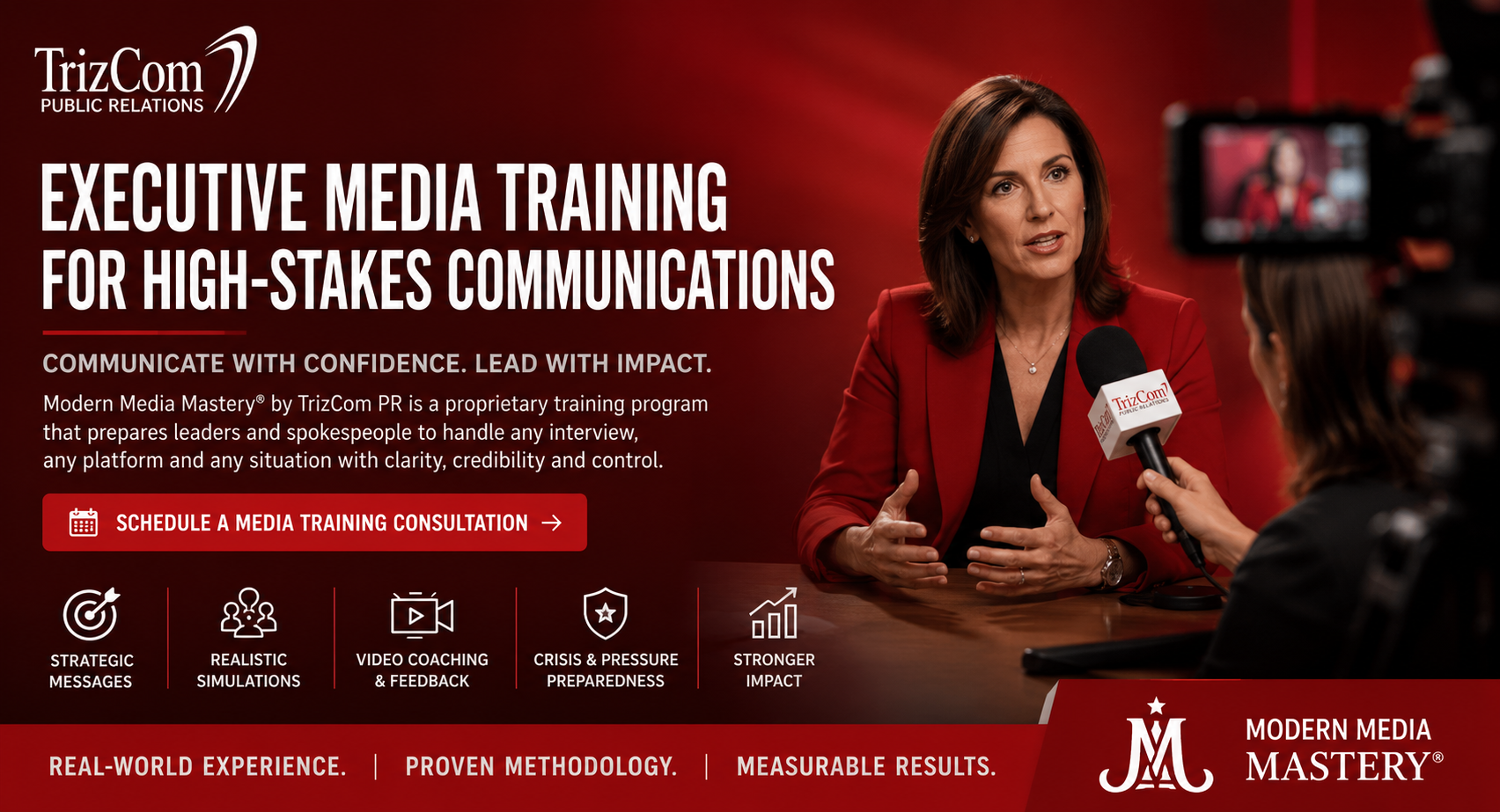
Media Training for Executives Tailored to Empower Executive Leaders

Being a leader in today’s fast-paced, media-driven online world is challenging, no matter how experienced you are.

Even the smartest executives can struggle to confidently convey their message, maintain control of the interview and establish credibility while speaking to the media in high-stakes interactions. Without the right training, these moments can lead to missed opportunities or even reputational risks.

But imagine if you could walk into every media interaction with the confidence, control and influence of a seasoned communicator, effortlessly positioning yourself and your organization as trusted leaders. Media training helps you prepare for an interview, master the skills to navigate media interactions, shape public perception and strengthen your credibility—all while enhancing your personal and professional brand.

High stakes media interactions are times of opportunity and accountability for today’s leaders. These moments require more than just knowledge of the subject – they need a polished ability to communicate, stay calm and connect with your audience. Our tailored Media Training for Executives program includes comprehensive media relations strategies to help leaders shape narratives, manage tough questions and strengthen their public image.

Media training bridges the gap between expertise and delivery, giving leaders the tools to perform under pressure. It’s not just about what you say, but how you say it so it resonates, builds trust and reinforces your credibility.

Here’s how TrizCom PR’s Media Training for Executives program helps leaders master high-stakes moments with confidence, control and credibility:

  1. Command Confidence in Any High-Stakes Setting

    Picture yourself walking into a press conference or sitting in front of a camera, the lights and attention focused squarely on you. In those moments, confidence is your greatest ally. Media training equips you to project composure, authority and confidence using effective body language and eye contact, even when the stakes are high. Imagine practicing through mock interviews where you receive tailored feedback to refine your tone, posture and delivery. The goal isn’t to have all the answers but to communicate with conviction and assurance. This preparation empowers you to inspire trust, making your message resonate deeply with your audience.

  2. Stay on Message, Even Under Pressure

    In a live interview, you’re asked an unexpected question that threatens to take the conversation off track. With media training, you’ll have the tools to pivot gracefully, emphasize your key messages and bring the focus back to your core message. Think of it as learning to weave a thread through every interaction, ensuring your key points shine through. Through practice, you’ll develop the discipline to avoid distractions, reframe challenging topics and keep your narrative consistent. This skill not only protects your message but also demonstrates your strategic clarity as a leader.

  3. Navigate Challenging Questions with Poise

    Imagine being asked a tough, probing question in front of a room full of stakeholders or journalists. Instead of stumbling, you calmly smile, pause to gather your thoughts and deliver a confident, thoughtful response. Media Training for Executives provides frameworks for handling tough questions and difficult questions, allowing you to maintain control and credibility. You’ll learn how to reframe difficult questions, address sensitive topics with tact and seize opportunities to reinforce your message. The result? You come across as composed, credible and fully in command of the conversation.

  4. Build Credibility Through Authentic Storytelling

    When an audience hears your story, they want to feel connected—not just to the facts but to the person behind them. Media Training for Executives teaches you to draw from your experiences and communicate with authenticity. Imagine recounting a pivotal moment in your leadership journey that aligns with your company’s vision. These personal touches humanize your message, creating emotional connections through concise answers and memorable sound bites that foster trust and admiration. The ability to craft and deliver such stories with confidence makes your leadership both relatable and inspiring.

  5. Adapt Seamlessly to Any Media Format

    From a polished in-person interview to an impromptu virtual press conference, media appearances across various media outlets come in all shapes and sizes. Media Training for Executives ensures you’re ready for them all. Envision practicing for multiple formats, learning to adjust your energy and approach to suit different platforms and audiences. Whether you’re answering rapid-fire questions in a live setting or delivering a thought-provoking keynote online, you’ll be prepared to connect with your audience and leave a lasting impression.

  6. Maintain Composure in Crisis Scenarios

    During moments of crisis, all eyes turn to leadership for reassurance. Media Training for Executives gives you the confidence to rise to the occasion by effectively answering questions and maintaining composure. Imagine facing a room full of reporters with pressing questions while calmly delivering a message of stability and action. Through simulated scenarios, you’ll develop techniques to manage emotions, maintain focus and communicate effectively. This preparation not only steadies you but also reassures your audience, strengthening their trust in your leadership.

  7. Strengthen Your Leadership Brand

    Every media interaction is an opportunity to emphasize your key messages, key points, values, vision and credibility as a leader. Media Training for Executives helps you ensure that these moments align with your personal and professional brand. Picture yourself consistently articulating your ideas with clarity and conviction, leaving no doubt about your expertise and authority. This alignment between message and delivery not only bolsters your individual reputation but also enhances your organization’s image, positioning you as a trusted voice in your industry.

Understanding the importance of high-stakes communication is one thing but mastering it in the moment is another entirely. The good news? With the right guidance and preparation, you can excel with confidence and ease.


The Executive Media Readiness Gap: Before and After Media Training

Understanding the value of Media Training for Executives becomes clearer when you compare what typically happens without preparation versus what happens with structured, strategic coaching.

High-stakes interviews expose gaps quickly. The difference between reactive communication and disciplined leadership messaging is measurable.

Here is how executive performance shifts with professional media training:

Critical Area Without Media Training With TrizCom PR Media Training for Executives
Confidence Under Pressure Visible nerves, rushed answers, defensive tone Calm, composed delivery with controlled pacing
Message Discipline Wandering responses, diluted key points Clear, concise messaging anchored to three core pillars
Handling Tough Questions Over-explaining, evasion or reactive answers Strategic pivots, reframing and direct yet controlled responses
Executive Presence Distracting body language, filler words Confident posture, steady eye contact and strong vocal control
Soundbite Creation Long explanations that lack clarity Memorable, quotable statements that reinforce authority
Crisis Communication Inconsistent messaging, emotional tone Structured responses aligned with crisis strategy
Brand Alignment Personal comments that unintentionally conflict with corporate messaging Consistent leadership voice aligned with organizational goals

TrizCom PR’s Media Training for Executives bridges the gap between expertise and delivery.

Executives already know their business. What they need is the discipline, structure and rehearsal that allow them to communicate that expertise clearly under pressure.

In today’s fast-moving media environment, preparation is not about avoiding embarrassment. It is about protecting reputation, strengthening credibility and positioning leadership as steady and strategic.

That transformation does not happen by accident. It happens through intentional, tailored executive media training.

 
An executive being interviewed by multiple journalists

Understanding the Media Landscape

Today, the media landscape is more complex and fast-moving than ever before. For executives, understanding this landscape is essential to navigating media interviews and public appearances with confidence. Media Training for Executives empowers leaders to stay ahead of emerging trends, new platforms and shifting audience expectations. By gaining insight into the nuances of print, broadcast, online and social media, executives can tailor their approach for each format, whether it’s a press conference, a one-on-one interview, or a town hall meeting.

Through targeted training, executives develop the relevant skills to communicate effectively across all media channels. This includes learning to adapt messaging for different audiences, understanding journalists' expectations and recognizing the unique opportunities and challenges each media format presents. By mastering the media landscape, executives can craft a comprehensive strategy that supports their organization’s objectives and ensures their message resonates in any setting.


Developing Key Messages

TrizCom PR's Building Media Mastery

At the heart of every successful media interaction lies a set of clear, compelling key messages. TrizCom PR’s Media Training for Executives focuses on helping leaders identify and articulate the key points that matter most to their audience. These core messages serve as the foundation for all communication, especially in high-pressure situations where clarity and consistency are vital.

Media Training for Executives includes practical exercises to distill complex ideas into simple, memorable statements that communicate effectively with both the media and the public. Executives learn to craft messages that are concise, impactful and adaptable to different media channels, without losing sight of the core message. By practicing delivering these key messages, leaders can stay focused under pressure, ensuring their organization’s values and vision remain front and center. This approach not only strengthens executive communication but also builds trust and credibility with every audience.


Crisis Communication for Executives

When a crisis hits, the spotlight is on executive leaders to provide reassurance and direction. Media Training for Executives prepares executives to handle crisis communication with confidence, equipping them with proven strategies and techniques to communicate effectively under pressure. Executives learn the importance of transparency, honesty and empathy, as well as how to develop a crisis communication plan that aligns with organizational goals.

Media Training for Executives sessions focus on practical skills such as managing body language, maintaining composure and delivering powerful messages even when facing tough questions from the media. Executives practice responding to challenging scenarios, learning how to stay calm, address sensitive issues and reinforce their organization’s commitment to stakeholders. By mastering these crisis communication techniques, leaders can protect their organization’s reputation and maintain the trust of their audience, even in the most demanding situations.


Building Executive Presence in the Media Spotlight

Executive presence is the intangible quality that sets great leaders apart in the media spotlight. TrizCom PR’s Media Training for Executives program helps executives cultivate this presence by focusing on the skills and strategies that project confidence, credibility and authority. Through personalized coaching, leaders practice their delivery, refine their storytelling techniques and learn how to make meaningful eye contact, whether speaking to a live audience or through a camera lens.

Media Training for Executives also covers the importance of maintaining a professional manner, using technical terms accurately and avoiding common pitfalls such as filler words or distracting gestures. By honing these skills, executives can communicate effectively in any public speaking or media scenario, establishing themselves as trusted thought leaders. The result is a commanding executive presence that inspires confidence in both the organization and its audience.

An executive being interviewed by multiple journalists
 
Karen Carrera - Woman in Blue Business Suit

At TrizCom PR, we know that being in the spotlight can be both exciting and intimidating.

Whether you’re sharing your vision with stakeholders or handling a tough question in an interview, the way you communicate can shape how people see you and your organization. That’s why we’re passionate about helping leaders like you navigate these moments with confidence, clarity and purpose through our tailored media training program.

At the heart of this program is Karen Carrera, a true expert in media relations with over 30 years of experience. Karen isn’t just a trainer; she’s a storyteller and strategist who understands the pressures leaders face in today’s fast-moving media world. Her journey spans journalism and public relations, giving her a unique perspective on how to help leaders shine in front of any audience.

Karen’s approach to media training is personal and practical. She doesn’t just teach techniques—she gets to know you, your goals and your style, crafting sessions that are as individual as you are. Whether it’s helping you refine your message or preparing you to handle tough questions with grace, Karen’s guidance ensures you’ll walk into any media moment feeling prepared and empowered.

At TrizCom PR, we’re here to help you succeed in the moments that matter most. With Karen’s expertise and our team’s support, you’ll gain the skills to confidently tell your story, strengthen your leadership presence and connect with your audience like never before.


Want to see how we can boost your media confidence?


Results You Can Achieve with Media Training

person with lines radiating icon

Confidence

Build the poise and self-assurance needed to deliver clear, impactful messages when speaking to the media, even in high-pressure situations.

icon - man figure holding paper with a check mark

Control

Learn techniques to guide conversations, manage tough questions, control the interview and maintain control of your narrative during media interactions.

hand icon holding a microphone

Influence

Master the art of persuasive communication to shape opinions, inspire action and strengthen your leadership presence.


two hands shaking with a checkmark badge icon

Credibility

Enhance your reputation as a trusted and authoritative voice by communicating with clarity, authenticity and expertise.

square with the words: How It Works
  1. Let’s Talk About Your Goals

    Start with a free confidential 30-minute strategy session where we’ll get to know you, your challenges and what you want to achieve. Together, we’ll craft a plan that fits your needs and sets you up for success.

  2. Work With a Trusted Expert

    Partner with our seasoned media trainer, in personalized sessions designed just for you. Through hands-on practice and supportive feedback, you’ll build the confidence and skills to handle any media situation.

  3. Shine in Every Media Moment

    Step into the spotlight prepared and self-assured. With ongoing guidance from TrizCom PR, you’ll be ready to share your message, connect with your audience and leave a lasting impression.


Ready to take the first step? Let’s make your media moments count.


Here’s What You’ll Get in TrizCom PR’s Media Training for Executives Program

Authentic Storytelling: Developing compelling narratives to connect with stakeholders and audiences authentically.

Soundbite Mastery: Creating concise, impactful statements that resonate and are memorable.

Reputation Management Strategies: Insights on enhancing personal and organizational credibility and trust.

Simulated Interviews: Realistic practice scenarios to build confidence and polish delivery.

Results-Oriented Approach: A focus on measurable improvements that reinforce leadership presence and communication impact.

Personalized Training Plans: Tailored sessions to address the unique needs and challenges faced by executives.

Expert-Led Coaching: One-on-one guidance from seasoned professionals like Karen Carrera, ensuring top-tier expertise.

Message Development: Crafting clear, strategic key messages that align with organizational goals.

Crisis Communication Training: Equipping executives with strategies to confidently handle high-pressure or sensitive media scenarios.

Handling Tough Questions: Tools and techniques to navigate challenging or unexpected queries with poise.


Ready to Lead with Confidence in Every Media Moment?

High-stakes media interactions are not a matter of if. They are a matter of when.

The question is simple. Will you walk in hoping it goes well, or prepared to lead the conversation?

TrizCom PR’s Media Training for Executives program is built for leaders who understand that communication is power. In today’s fast-moving media environment, preparation is not just about avoiding mistakes. It is about owning the narrative, reinforcing credibility and positioning yourself and your organization as trusted authorities.

When you invest in executive media training, you gain:

  • Greater confidence under pressure

  • Clear, disciplined messaging

  • Control in challenging interviews

  • Stronger executive presence on camera and in person

  • Crisis communication readiness

  • Enhanced personal and organizational credibility

Led by seasoned media expert Karen Carrera, our tailored coaching sessions combine strategy, practice and real-time feedback so you are fully prepared for broadcast interviews, digital appearances, podcasts, press conferences and crisis situations.

You have earned your leadership role. Now make sure your communication reflects it.

If you are ready to strengthen your executive presence and master high-stakes media interactions, let’s talk.

Schedule your confidential strategy session today.

A row of television cameras

Case Studies and Best Practices: Real-World Media Wins

Learning from real-world examples is a powerful way for executives to elevate their media performance. Media Training for Executives incorporates case studies of successful media interviews and crisis responses, highlighting the strategies and techniques that led to positive outcomes. By analyzing these examples, executives gain practical insights into how key messages, body language and delivery can make or break a media appearance.

Best practices are reinforced through personalized coaching, constructive feedback and regular practice sessions, including mock interviews and challenging questions. Executives have the opportunity to fine-tune their skills, build confidence and develop strategies for handling tough questions and challenging interviews. By applying lessons from real-world successes and learning from common pitfalls, leaders can continually improve their performance and achieve their communication goals with every media interaction.

What do you do in media training?

In media training for executives, coaching sessions and media interview training are core components that prepare leaders to communicate confidently and effectively during interviews, presentations and high-stakes moments. Through personalized coaching, simulated scenarios (mock interviews) and expert feedback, we help refine messaging, manage tough questions and build skills to navigate the media with poise, authenticity and impact. These elements are designed to improve performance in real-world media situations.

Why is media training important?

Media training is vital because it helps people communicate with confidence and authenticity in high-pressure situations. It teaches how to stay calm, deliver clear messages and handle tough questions gracefully. By mastering these skills, leaders can connect with audiences, build trust and leave a lasting, positive impression that strengthens their personal and professional reputation.

Media training is also a vital part of an effective PR strategy for executives, ensuring they are prepared to represent their organization and uphold its reputation in any media interaction.

What are different types of media training?

Media training includes various types tailored to specific needs: basic skills for media interactions, crisis communication strategies, message development, on-camera confidence, interview preparation and soundbite creation. Other types include media interview training, coaching sessions, virtual media training, cross-cultural adaptation, public speaking and reputation management. These focus on building confidence, refining messages and mastering diverse media scenarios.

Is media training a real thing?

Yes, media training is a real and valuable resource. It equips individuals, especially leaders, with skills to communicate effectively during interviews, press conferences and high-stakes moments. Expert guidance from PR professionals is a key part of effective media training, providing strategic coaching to help participants refine messages, handle tough questions and build confidence. This ensures they navigate media interactions with professionalism and impact.

How long is the media training?

Media training typically lasts a half day to a full day, depending on the number of participants and the depth of the training. For individuals, sessions are often shorter and focused, while group training may require more time to ensure all participants receive personalized guidance and practice opportunities tailored to their specific needs and goals.

What skills can I expect to learn from media training?

Media training builds an essential skill set for handling media interactions, including the use of talking points to communicate key messages under pressure. It develops skills like crafting clear messages, handling tough questions, maintaining composure under pressure and mastering on-camera presence. Participants also learn techniques for delivering memorable soundbites, using effective body language, maintaining eye contact, delivering concise answers and engaging diverse audiences, ensuring confidence and credibility in any media interaction.

Who should participate in media training sessions?

Media training is ideal for executives, spokespersons, entrepreneurs, board members, clients representing their organizations and anyone appearing publicly on behalf of their company. Both new and seasoned leaders benefit from media training, as even experienced professionals can stumble during high-pressure interviews without proper preparation. It’s especially valuable for leaders managing high-stakes media interactions, preparing for interviews, or seeking to refine their communication skills for greater impact and influence.

How is media training tailored to individual needs?

Media training is customized by assessing individual goals, challenges and roles. Trainers design sessions to focus on specific areas like interview preparation, crisis communication or public speaking. Tailored scenarios and real-time feedback ensure the training addresses unique needs, building relevant and practical skills.

What types of scenarios are covered in media training?

Media training covers scenarios like live interviews, press conferences, panel discussions, virtual appearances, crisis situations and crisis response. Participants practice managing challenging questions, delivering key messages, handling interruptions and maintaining composure, preparing them for real-world interactions with journalists and audiences.

Can media training help with virtual interviews and presentations?

Absolutely. Media training includes techniques for virtual settings, such as optimizing lighting, camera angles and audio. Participants also learn how to engage remote audiences effectively, adjust body language for the screen and deliver clear, confident messages during virtual interviews and presentations.

Can media training work remotely?

Yes, media training can be delivered remotely through interactive virtual sessions. Trainers use video conferencing tools to conduct simulated interviews, provide feedback and share practical tips. Remote training ensures flexibility while maintaining the quality and personalization of in-person sessions.

What is the difference between group and individual media training?

Group media training focuses on aligning messaging across teams, fostering collaboration and addressing shared goals. Individual training offers a personalized approach, focusing on specific strengths, challenges and leadership styles. Both are tailored to ensure participants gain practical skills for media success.

How often should media training be refreshed?

Media training should be refreshed annually or whenever significant changes occur, such as new roles, messaging updates or industry shifts. Regular refreshers help maintain confidence, adapt to evolving media trends and ensure preparedness for unexpected opportunities or challenges.

Can media training help improve public speaking skills?

Yes, media training enhances public speaking by focusing on message clarity, confidence, body language and audience engagement. It equips participants to deliver impactful presentations, whether in media interviews, conferences or stakeholder meetings, fostering credibility and connection.

What industries benefit the most from media training?

Industries like healthcare, finance, technology, nonprofit, government and entertainment benefit greatly from media training. Any field requiring public representation, crisis management or stakeholder communication can leverage media training to strengthen messaging and leadership impact.

How do I know if media training is right for me?

If you regularly engage with the media, represent your organization publicly or want to build confidence in high-stakes communication, media training is for you. It's ideal for leaders, spokespersons and anyone aiming to refine their messaging and professional presence.


Results You Can Achieve with Media Training

Personalized Training Plans

Coaching sessions are tailored to address the unique needs and challenges faced by executives, providing targeted practice and skill development.

Expert-Led Coaching

One-on-one expert guidance from seasoned PR professionals like Karen Carrera, ensuring top-tier expertise and strategic support.

Message Development

Crafting clear, strategic key messages that align with organizational goals, with media interview training included to help improve performance.

Crisis Communication Training

Equipping executives with strategies to confidently handle high-pressure or sensitive media scenarios.

Handling Tough Questions

Tools and techniques to navigate challenging or unexpected queries with poise, supported by media interview training to further improve performance.

Ongoing Feedback

Feedback remains a very important aspect of media training, helping executives fine-tune their skills for future interviews.

What do you do in media training?

In media training, we prepare leaders to communicate confidently and effectively during interviews, presentations and high-stakes moments. Through personalized coaching, simulated scenarios (mock interviews) and expert feedback, we help refine messaging, manage tough questions and build skills to navigate the media with poise, authenticity and impact.

Why is media training important?

Media training is vital because it helps people communicate with confidence and authenticity in high-pressure situations. It teaches how to stay calm, deliver clear messages and handle tough questions gracefully. By mastering these skills, leaders can connect with audiences, build trust and leave a lasting, positive impression that strengthens their personal and professional reputation.

What are different types of media training?

Media training includes various types tailored to specific needs: basic skills for media interactions, crisis communication strategies, message development, on-camera confidence, interview preparation and soundbite creation. Other types include virtual media training, cross-cultural adaptation, public speaking and reputation management. These focus on building confidence, refining messages and mastering diverse media scenarios.

Is media training a real thing?

Yes, media training is a real and valuable resource. It equips individuals, especially leaders, with skills to communicate effectively during interviews, press conferences and high-stakes moments. Through expert coaching, participants learn to refine messages, handle tough questions and build confidence, ensuring they navigate media interactions with professionalism and impact.

How long is the media training?

Media training typically lasts a half day to a full day, depending on the number of participants and the depth of the training. For individuals, sessions are often shorter and focused, while group training may require more time to ensure all participants receive personalized guidance and practice opportunities tailored to their specific needs and goals.

What skills can I expect to learn from media training?

Media training builds essential skills like crafting clear messages, handling tough questions, maintaining composure under pressure and mastering on-camera presence. Participants also learn techniques for delivering memorable soundbites, using effective body language, maintaining eye contact, delivering concise answers and engaging diverse audiences, ensuring confidence and credibility in any media interaction.

Who should participate in media training sessions?

Media training is ideal for executives, spokespersons, entrepreneurs, board members and anyone representing their organization publicly. It’s especially valuable for leaders managing high-stakes media interactions, preparing for interviews or seeking to refine their communication skills for greater impact and influence.

How is media training tailored to individual needs?

Media training is customized by assessing individual goals, challenges and roles. Trainers design sessions to focus on specific areas like interview preparation, crisis communication or public speaking. Tailored scenarios and real-time feedback ensure the training addresses unique needs, building relevant and practical skills.

What types of scenarios are covered in media training?

Media training covers scenarios like live interviews, press conferences, panel discussions, virtual appearances and crisis situations. Participants practice managing challenging questions, delivering key messages, handling interruptions and maintaining composure, preparing them for real-world interactions with journalists and audiences.

Can media training help with virtual interviews and presentations?

Absolutely. Media training includes techniques for virtual settings, such as optimizing lighting, camera angles and audio. Participants also learn how to engage remote audiences effectively, adjust body language for the screen and deliver clear, confident messages during virtual interviews and presentations.

Can media training work remotely?

Yes, media training can be delivered remotely through interactive virtual sessions. Trainers use video conferencing tools to conduct simulated interviews, provide feedback and share practical tips. Remote training ensures flexibility while maintaining the quality and personalization of in-person sessions.

What is the difference between group and individual media training?

Group media training focuses on aligning messaging across teams, fostering collaboration and addressing shared goals. Individual training offers a personalized approach, focusing on specific strengths, challenges and leadership styles. Both are tailored to ensure participants gain practical skills for media success.

How often should media training be refreshed?

Media training should be refreshed annually or whenever significant changes occur, such as new roles, messaging updates or industry shifts. Regular refreshers help maintain confidence, adapt to evolving media trends and ensure preparedness for unexpected opportunities or challenges.

Can media training help improve public speaking skills?

Yes, media training enhances public speaking by focusing on message clarity, confidence, body language and audience engagement. It equips participants to deliver impactful presentations, whether in media interviews, conferences or stakeholder meetings, fostering credibility and connection.

What industries benefit the most from media training?

Industries like healthcare, finance, technology, nonprofit, government and entertainment benefit greatly from media training. Any field requiring public representation, crisis management or stakeholder communication can leverage media training to strengthen messaging and leadership impact.

How do I know if media training is right for me?

If you regularly engage with the media, represent your organization publicly or want to build confidence in high-stakes communication, media training is for you. It’s ideal for leaders, spokespersons and anyone aiming to refine their messaging and professional presence.

If you have more questions about media training, don’t hesitate to get in touch with us. 972-247-1369 or jo@trizcom.com.


Updated January 6, 2026