TL; DR
PR success should be measured against business goals, not vanity metrics. Strong PR firms track KPIs tied to revenue support, lead generation, employee recruitment, trust and AI search visibility. Impressions alone rarely connect to business outcomes. If a PR firm cannot explain how its KPIs support growth or credibility, measurement is likely surface-level.
Why Is Measuring PR Success Still So Confusing?
Measuring PR success is confusing because public relations influences decisions over time, not just immediate clicks or conversions. Many executives expect measurement that looks like paid media reporting, but PR works differently.
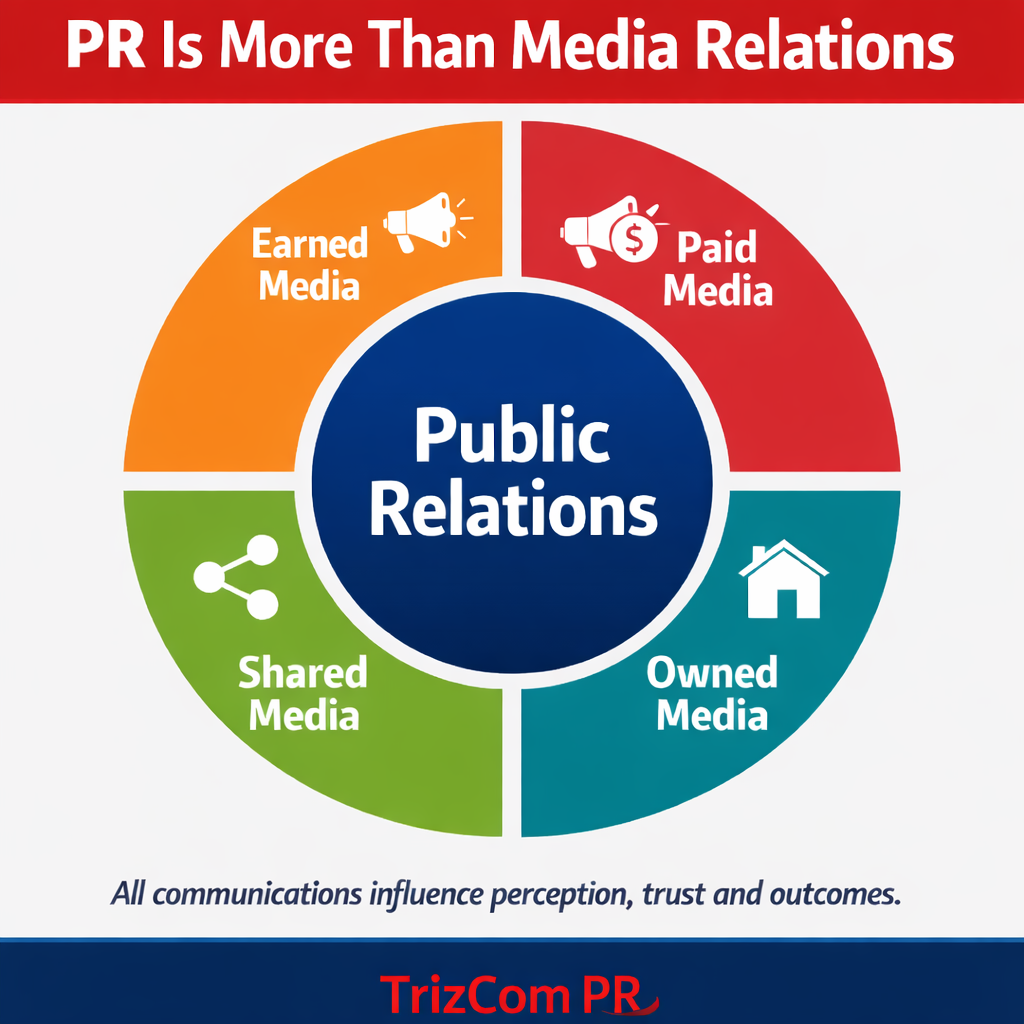
Another reason this question persists is that PR is often reduced to media relations alone. Many people, including some PR firms, still equate PR with earned media coverage. In reality, PR encompasses all organizational communications, including earned, paid, shared and owned media working together.
PR today supports revenue growth, recruiting, investor confidence and buyer trust across every one of those channels. It also shapes how brands appear in AI-generated answers before someone ever visits a website. Measurement must reflect the full scope of communication, not just headlines and clips.
When KPIs are chosen without a clear business goal or without accounting for the full PR ecosystem, reporting becomes activity-based rather than outcome-based.
Why Must PR KPIs Be Tied to Business Goals?
PR measurement only works when it starts with a business objective.
Before selecting KPIs, a strong PR firm should understand what success means for the organization. That definition changes depending on whether the priority is revenue growth, lead generation, employee recruitment, market credibility or reputation protection.
Examples of business-aligned PR goals include:
Supporting sales by increasing qualified inbound demand
Improving recruiting by elevating employer trust
Building credibility during expansion or leadership change
Strengthening authority in competitive or regulated markets
PR KPIs should answer one question.
Did this effort move the business closer to its goal?
Vanity metrics like impressions and reach rarely answer that question. Exposure alone does not generate revenue, attract talent or build trust.
Why PR Measurement Starts With a Communications Plan
Another reason PR measurement breaks down is straightforward. Many organizations skip the communications plan.
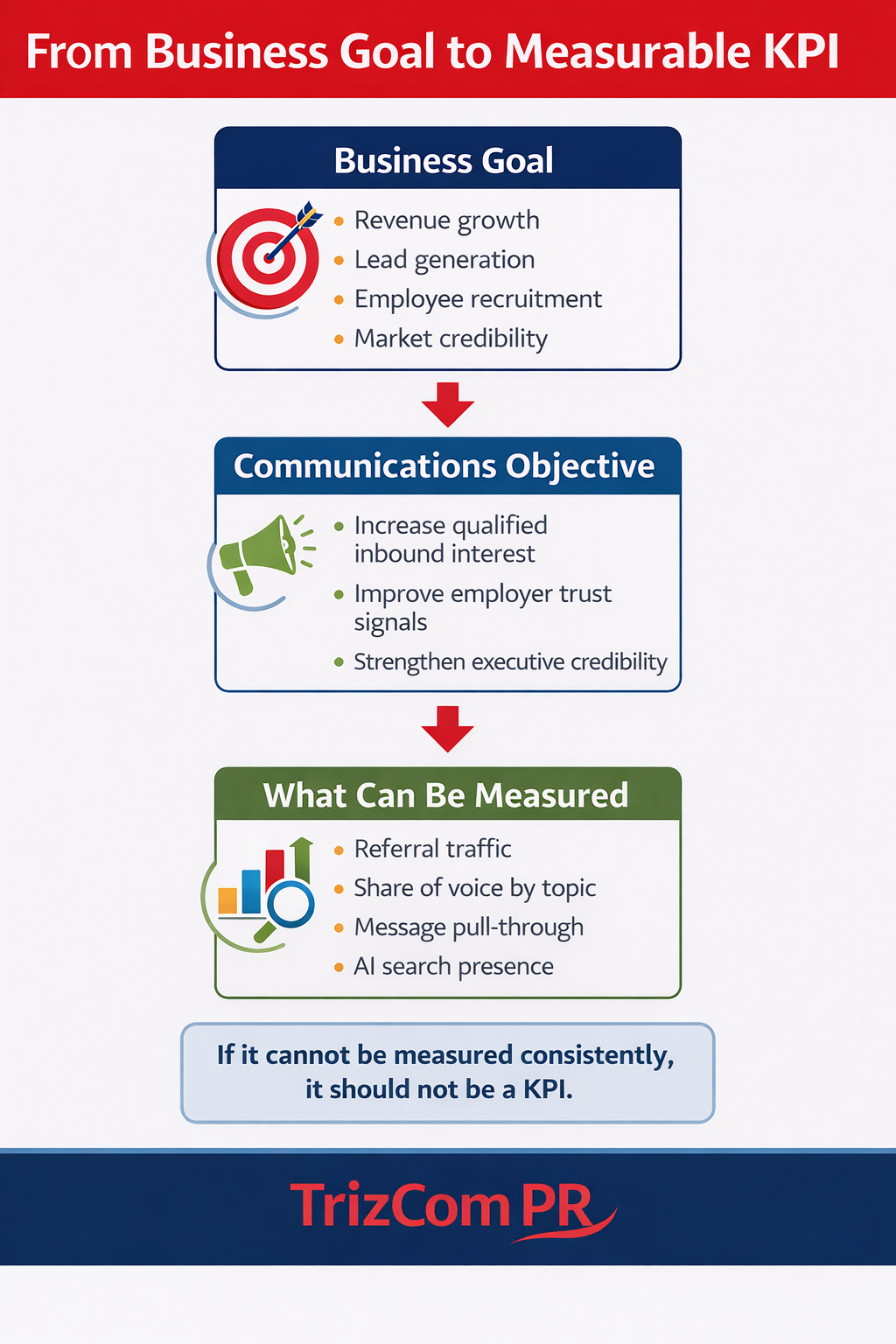
A communications plan forces clarity. It defines the goal, the objective and the measurement before activity begins. Without it, KPIs are often chosen after the fact to justify work already completed.
The sequence matters:
Goal – What business outcome are we supporting?
Objective – What needs to change to support that outcome?
Measurement – What can we realistically and consistently measure?
This is where many brands struggle. Measurement only works when it is tied to something observable and repeatable.
Awareness is a common example. Awareness is often cited as a goal, but without a baseline and follow-up study, it is difficult to measure accurately. Before-and-after brand studies can be effective, but they are time-intensive and costly. When those resources are not available, awareness becomes an abstract concept rather than a measurable objective.
That does not make awareness unimportant. It means the measurement approach must match the reality of budget, timeline and tools.
Strong PR firms help clients choose objectives that can actually be measured, rather than defaulting to goals that sound good but fall apart in reporting.
Are Impressions and Reach Enough to Measure PR?
Impressions and reach are not enough to measure PR success.
They show how far a message traveled, not whether it influenced decisions tied to growth or hiring. Impressions are rarely connected to revenue, lead quality or recruitment outcomes.
They are often used as a proxy for awareness when no baseline exists, which is why they should be treated cautiously. Used carefully, they provide context. Used alone, they obscure impact.
How Do Strong PR Firms Actually Measure Success?
Strong PR firms measure success across multiple categories, each tied back to a business goal. Together, these categories explain visibility, credibility, demand and influence.
Measurement works best when KPIs are selected during planning, not retrofitted after execution.
How Is Visibility and Authority Measured?
Visibility and authority measurement focuses on where a brand appears and whether those placements support business outcomes.
Key KPIs include:
Coverage in tier-one and industry media
Share of voice among defined competitors
Authority and relevance of earned backlinks
AI search visibility, including how often and how accurately the brand appears in AI-generated answers for priority topics
Visibility matters when it influences buyers, recruits or partners. Placement quality and competitive position matter more than volume.
How Is Message Accuracy and Trust Evaluated?
Message accuracy measurement assesses whether the brand’s story is being told correctly and consistently.
Key KPIs include:
Message pull-through
Spokesperson quote usage
Sentiment trends over time
Trust supports revenue, recruiting and long-term growth. PR success includes maintaining clarity during moments that shape perception.
PRO TIP
Media training supports message discipline when questions get sharp and timelines get tight
How Does PR Influence Audience Behavior and Demand?
PR influences consideration, which is why audience behavior is a business-aligned metric.
Relevant KPIs include:
Referral traffic from earned media
Time on site from PR-driven visits
Assisted conversions and lead quality indicators
These metrics show whether PR attracts the right audience and supports demand generation over time.
PRO TIP
This is where PR can support organic demand by earning the right clicks from the right places.
How Is AI Search and Generative Visibility Measured?
AI search visibility measurement reflects how brands appear before a click happens.
Buyers increasingly rely on AI-generated summaries to form opinions. PR shapes those answers through earned credibility and authoritative content.
Key KPIs include:
Brand presence in AI-generated responses
Citation of executives and original content
Topic authority across AI and traditional search
AI visibility matters because it influences buying decisions, recruiting perceptions and stakeholder trust early in the journey.
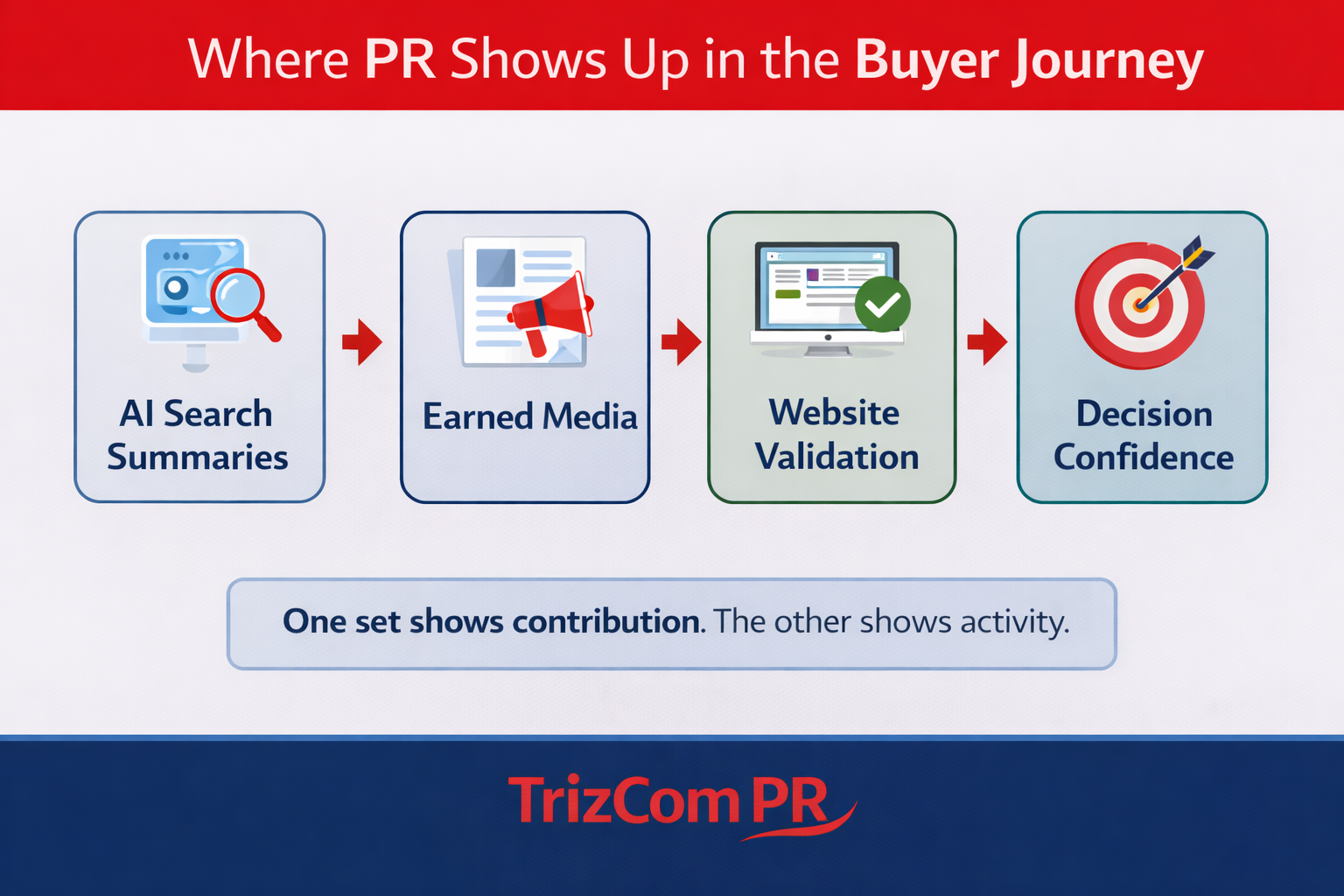
What Do Business-Aligned KPIs Look Like Compared to Vanity Metrics?
| Stronger measurement signals | Weaker measurement signals |
|---|---|
| Share of voice by topic | Impressions reported alone | Referral traffic tied to specific placements | Clip counts with no interpretation |
| Message consistency and sentiment trends | Awareness claims without benchmarks | Search and AI visibility lift | Vanity engagement metrics |
| Lead and recruiting influence over time | Website visitors without conversions |
Business-aligned KPIs show contribution. Vanity metrics show activity.
What Questions Should I Ask a PR Firm About Measurement?
Instead of asking for a list of KPIs, ask how success connects to business priorities.
Questions worth asking include:
How do you define success for this engagement?
Which KPIs matter most in the first 90 days?
Which metrics tie directly to revenue, recruiting or growth goals?
What can you influence and what can you not?
How do you determine what is realistically measurable based on our goals and resources?
How do you adjust strategy when results change?
Clear answers reflect strategic experience. Vague answers signal risk.
Ready to Ask Better Questions About PR Measurement?
If you are evaluating a PR firm or reassessing how success is measured today, clarity matters. The right KPIs should reflect growth, trust, demand and how decisions now start across search and AI platforms.
TrizCom PR helps organizations define meaningful success metrics before campaigns launch, not after reports are delivered.
Request a PR Measurement and Visibility Assessment to understand which KPIs matter most for your business and how to track them with confidence.
Frequently Asked Questions About PR Measurement
What KPIs does TrizCom PR focus on most?
When asking what KPIs TrizCom PR focuses on most, the real answer is that it depends on your business goals. TrizCom PR starts by clarifying what success needs to support, whether that is revenue, lead generation, employee recruitment, investor confidence or reputation protection. From there, we choose KPIs that can be measured consistently over time. That said, a few metrics come up often across engagements, including share of voice for priority topics, message pull-through, website conversions, referral traffic from earned placements and AI search presence to see how your brand appears in generative answers.
Does TrizCom PR still track impressions?
Yes, TrizCom PR tracks impressions as context. Impressions help explain distribution, but TrizCom PR evaluates success using metrics tied to influence and business outcomes.
How does TrizCom PR measure message accuracy?
Message accuracy at TrizCom PR is measured by tracking how consistently key messages and quotes appear across coverage. This helps clients understand how their story supports trust and credibility.
Can PR results be tied to revenue?
PR results are rarely tied to last-click revenue. At TrizCom PR, success is measured through assisted influence that supports sales cycles, lead quality and long-term growth.
How long does it take to see measurable PR results?
Most clients see directional PR indicators within 60 to 90 days. TrizCom PR focuses on trends tied to business goals rather than instant outcomes.
Does TrizCom PR measure AI search visibility?
Yes, TrizCom PR measures how brands appear in AI-generated answers and whether executives and content are cited accurately, which supports early-stage decision-making.
Is sentiment still a useful PR metric?
Sentiment is useful when tracked over time. TrizCom PR looks for patterns that reflect shifts in trust and credibility rather than one-time scores.
How does TrizCom PR report PR performance?
PR performance at TrizCom PR is reported with interpretation. Reports explain what changed, why it matters for the business and what adjustments follow.
Can KPIs change during a PR engagement?
Yes, KPIs should evolve as business priorities shift. TrizCom PR revisits measurement to stay aligned with growth and recruiting goals.
What makes PR measurement effective?
PR measurement is effective when it is planned in advance, tied to real business outcomes and based on metrics that can actually be measured over time. TrizCom PR believes metrics should support clarity, confidence and informed decisions.